
Hose Ferrules
Hose ferrules are critical components that secure hydraulic hoses to fittings, ensuring leak-free connections under high pressure. We offer a comprehensive range of high-quality ferrules, precisely engineered for diverse hydraulic applications. Our ferrules provide reliable performance, durability, and safety, enhancing your system’s efficiency.
Hose Ferrules Wholesale
For large-scale hydraulic system needs, our hose ferrules wholesale program offers competitive pricing and extensive inventory. We provide a wide variety of ferrules, compatible with diverse hose types and sizes, ensuring a perfect fit for your applications. Our products are manufactured to rigorous standards, guaranteeing durability and reliability under high-pressure conditions. We cater to bulk orders, offering customized solutions and efficient delivery, making us a trusted partner for your hydraulic component needs.
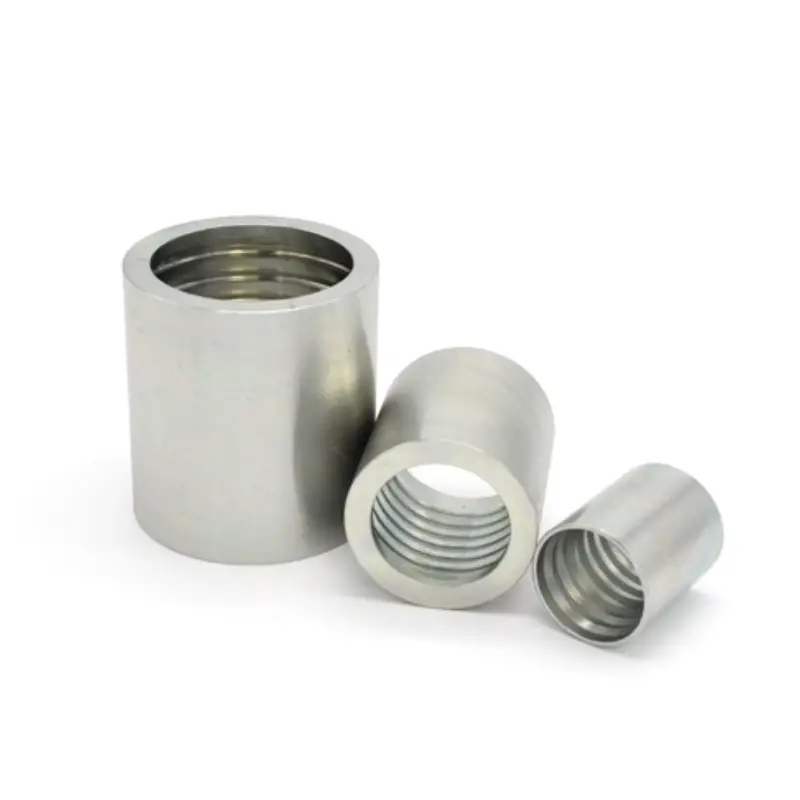
hydraulic ferrule benefits
- Secure and Leak-Free Connections: Ferrules provide a tight, reliable seal, preventing hydraulic fluid leaks even under high pressure and vibration.
- Enhanced System Safety: By ensuring secure connections, ferrules minimize the risk of hose blowouts and related accidents, protecting personnel and equipment.
- Increased System Efficiency: Proper ferrule selection optimizes fluid flow and pressure transmission, improving the overall efficiency and performance of hydraulic systems.
- Extended Hose Lifespan: Ferrules distribute pressure evenly across the hose end, reducing stress and wear, which prolongs the hose’s service life.
- Simplified Assembly and Maintenance: Ferrules facilitate quick and easy hose assembly, reducing installation time and simplifying maintenance procedures, leading to cost savings.
Why Choose Our Hose Ferrules
Superior Material Quality and Precision Engineering:
We employ only premium-grade materials, ensuring our ferrules withstand extreme pressures and harsh environments. Our manufacturing process adheres to stringent tolerances, guaranteeing precise fit and consistent performance. This commitment to quality translates to long-lasting, dependable connections, minimizing downtime and maintenance costs for your hydraulic systems.
Extensive Compatibility and Customization Options:
We offer a broad spectrum of ferrule sizes and types, catering to diverse hydraulic hose specifications and fitting requirements. Our comprehensive inventory ensures you find the perfect match for your application. Furthermore, we provide customization options for unique needs, allowing for tailored solutions that optimize your hydraulic system’s efficiency and integration.
Rigorous Testing and Adherence to Industry Standards
Each of our ferrules undergoes thorough testing to validate its performance under demanding conditions. We adhere to industry standards such as SAE and ISO, assuring our products meet the highest quality and safety benchmarks. This commitment to compliance guarantees that our ferrules deliver reliable performance, safeguarding your equipment and personnel.
Exceptional Customer Support and Timely Delivery
We prioritize customer satisfaction, offering expert guidance and support throughout the selection and procurement process. Our efficient logistics and distribution network ensures timely delivery, minimizing project delays. We strive to build long-term partnerships by providing responsive service and reliable products that meet and exceed your expectations.
DF Hydraulics: Your Leading Hose Ferrules Manufacturer
DF Hydraulics stands as a premier hose ferrule manufacturer, renowned for our commitment to quality and precision. We produce a comprehensive range of ferrules, engineered to meet the stringent demands of diverse hydraulic applications. Our products, crafted from high-grade materials, ensure secure, leak-free connections and optimal system performance. We prioritize customer satisfaction through rigorous testing, adhering to industry standards, and providing tailored solutions. Trust DF Hydraulics for reliable, durable, and expertly manufactured hose ferrules.
hydraulic hose ferrules
We offer a wide selection of high-quality ORB hydraulic hose fittings designed for reliable and leak-free connections. Our ORB fittings hydraulic are available in various sizes and configurations to suit your specific needs. We prioritize durability and performance, ensuring your hydraulic systems operate efficiently and safely.
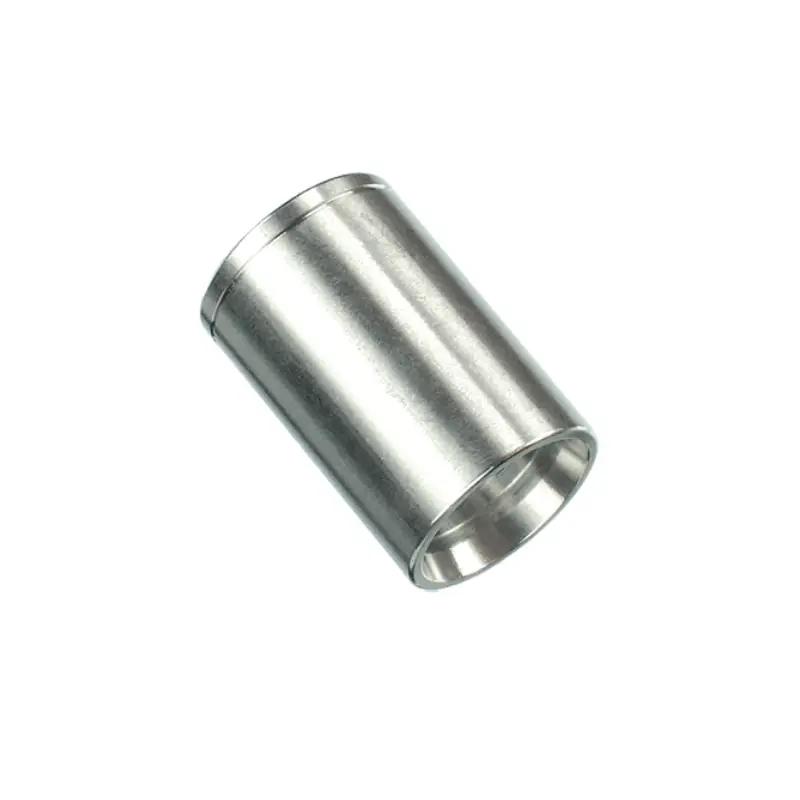
stainless steel hose ferrules
We offer a premium selection of stainless steel hose ferrules, engineered for superior corrosion resistance and durability in demanding hydraulic applications. Our stainless steel ferrules ensure secure, leak-free connections, even in harsh environments. We provide various sizes and types, adhering to stringent quality standards for reliable performance and extended lifespan.
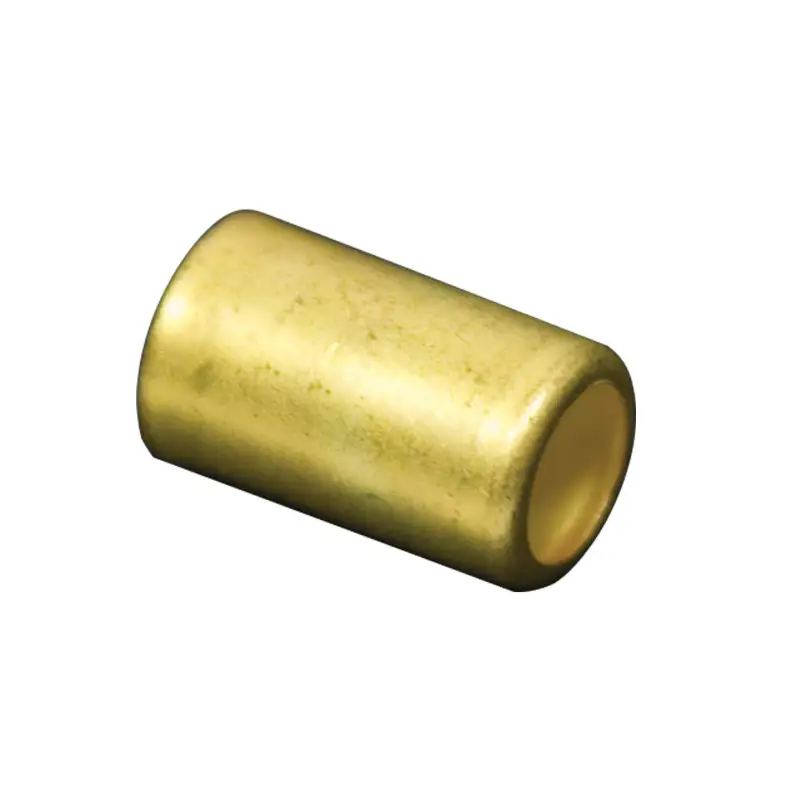
brass hose ferrule
We offer brass hose ferrules, ideal for applications requiring corrosion resistance and reliable connections. Our brass ferrules are precisely machined to ensure a secure fit, preventing leaks and maintaining system integrity. Suitable for various hose types, our brass ferrules provide durable and long-lasting performance in demanding environments.
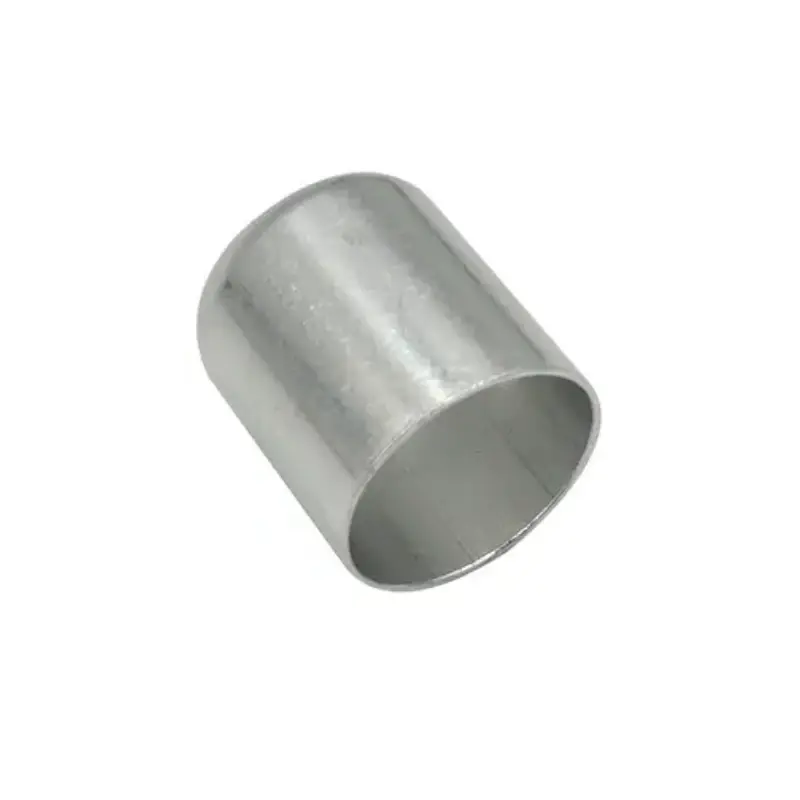
aluminum hose ferrules
We provide high-quality aluminum hose ferrules, ideal for lightweight and corrosion-resistant applications. Our aluminum ferrules ensure secure, leak-free connections, offering excellent durability and performance. They cater to diverse hydraulic and pneumatic systems in various sizes and specifications. Trust our expertise for reliable aluminum ferrule solutions.
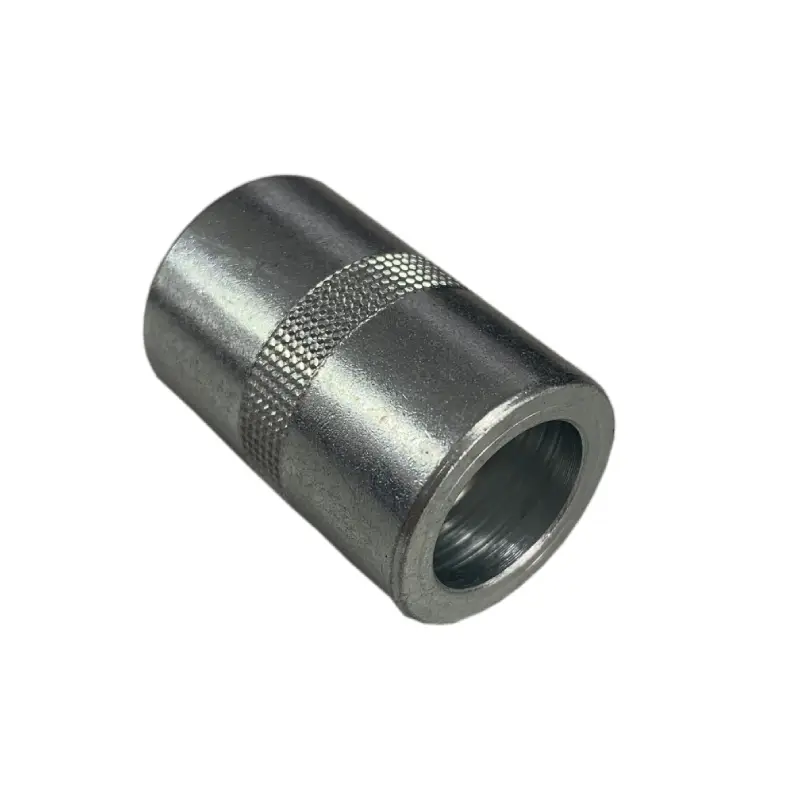
1/2 100R7 hydraulic hose ferrule
We offer high-quality ferrules specifically designed for 1/2″ 100R7 hydraulic hoses. Our ferrules ensure secure, leak-free connections, crucial for thermoplastic hydraulic systems. Engineered for precise fit and durability, they withstand demanding applications. Choose our reliable ferrules for optimal 100R7 hose performance.
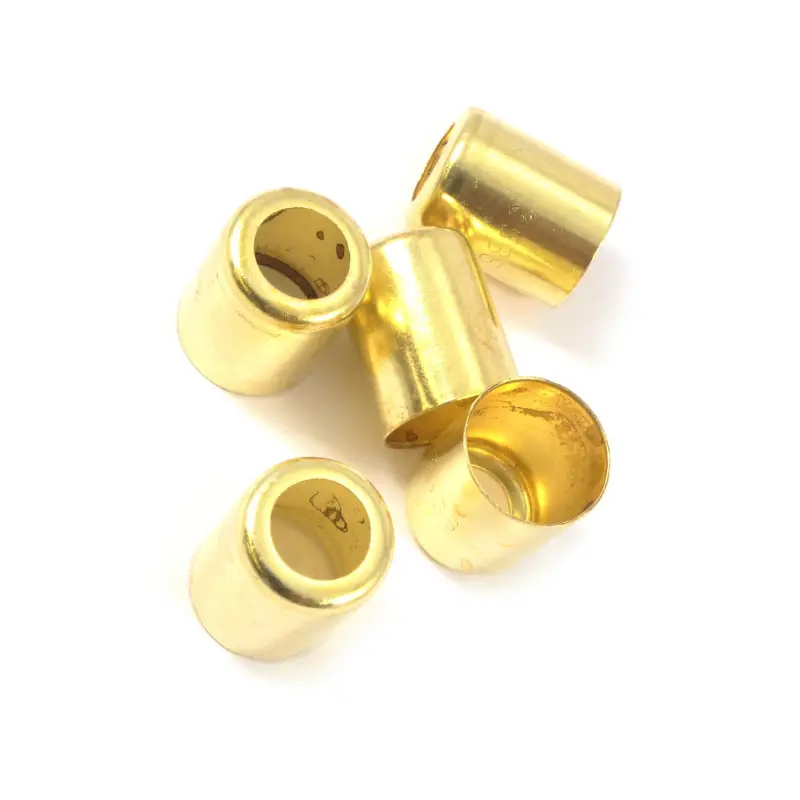
1/4 hose ferrule
We provide 1/4″ hose ferrules, engineered for precise and secure connections in various hydraulic systems. Our ferrules are manufactured to exacting standards, ensuring reliable performance and leak-free operation. We offer a range of materials and finishes, tailored to meet specific application requirements. Trust our 1/4″ hose ferrules for dependable hydraulic connections.
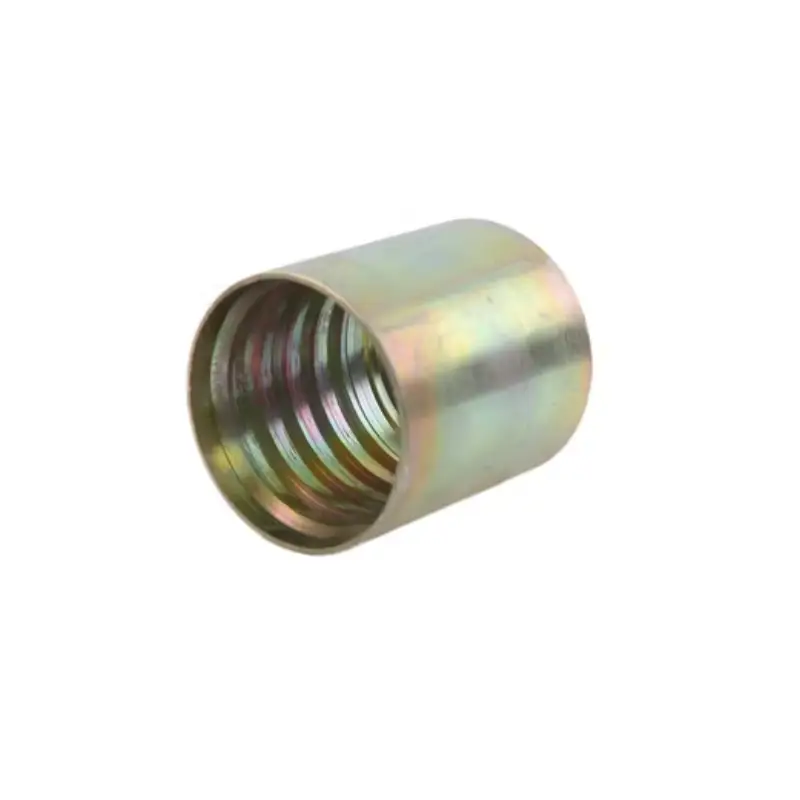
1 8 hose ferrule
We provide precision-engineered 1/8″ hose ferrules, designed for secure and reliable connections in compact hydraulic systems. Our ferrules are manufactured to exacting standards, ensuring leak-free performance under pressure. We offer various materials and finishes to meet specific application needs, guaranteeing optimal fit and durability. Trust our quality for efficient and safe hydraulic operations.
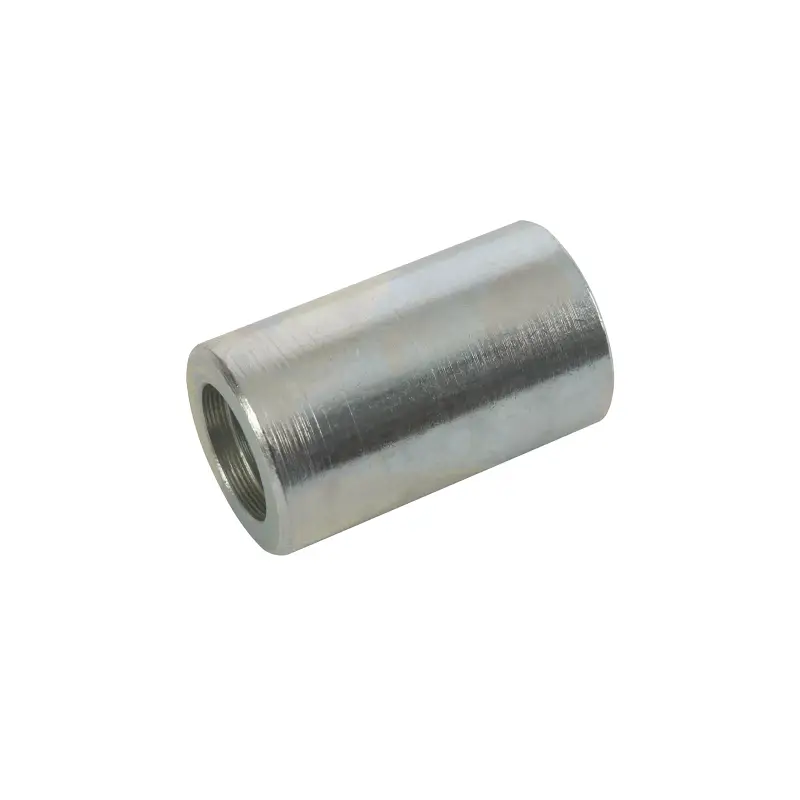
3/8 hose ferrule
We offer 3/8″ hose ferrules, engineered for secure and reliable connections in hydraulic systems. Our ferrules are manufactured to precise specifications, ensuring compatibility and optimal performance. Constructed from durable materials, they withstand high pressures and harsh conditions. Trust in our 3/8″ ferrules for leak-free and long-lasting hydraulic connections.
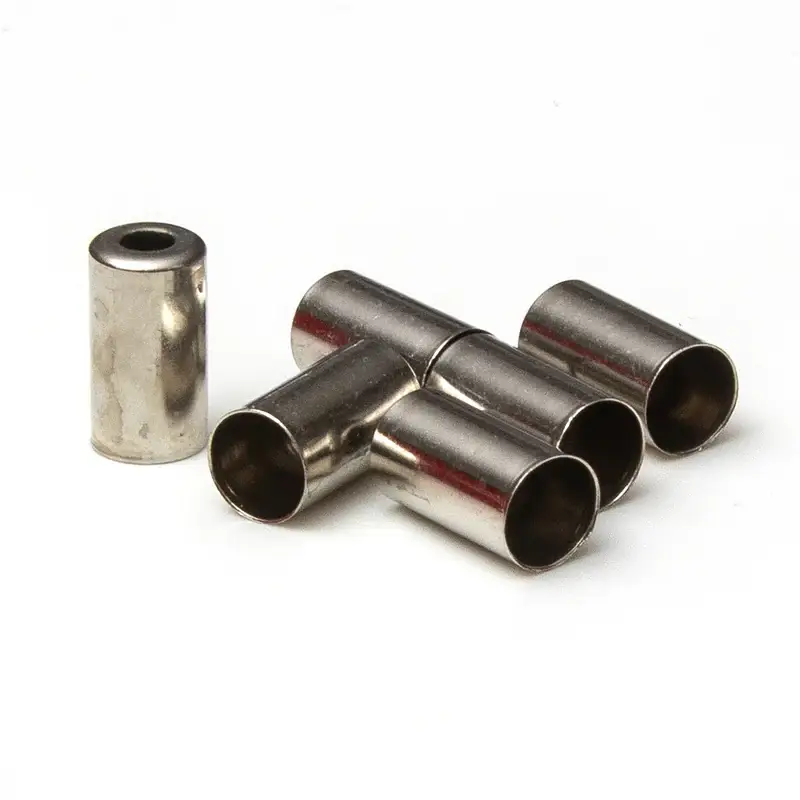
brake hose ferrules
We provide brake hose ferrules, engineered for secure and reliable connections in automotive and industrial braking systems. Our ferrules are manufactured to precise specifications, ensuring optimal performance and safety under demanding conditions. Available in various sizes and materials, our brake hose ferrules meet stringent industry standards, offering durability and leak-free operation.
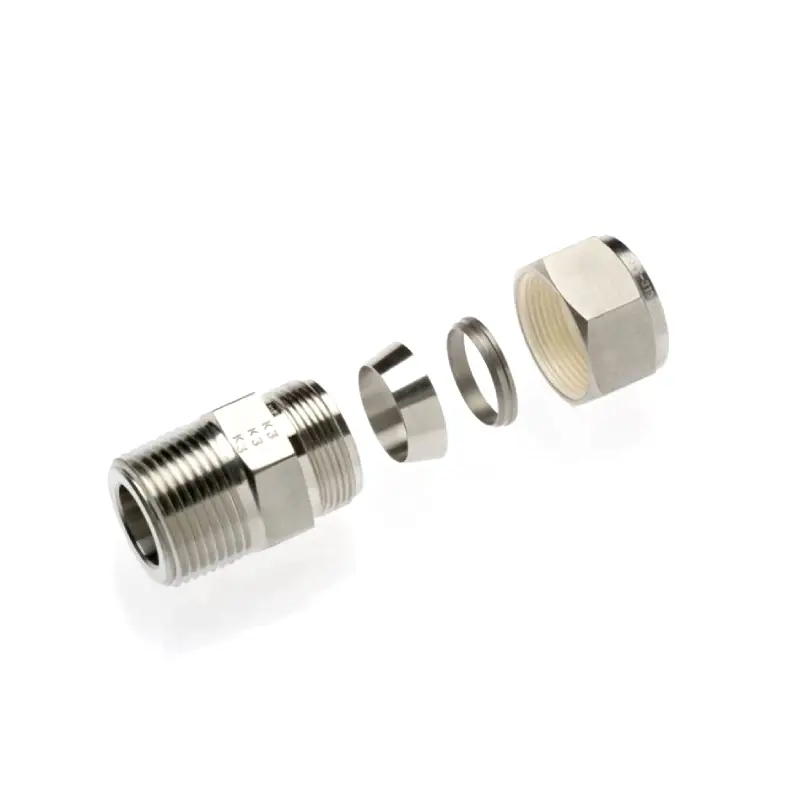
double ferrule hydraulic fittings
We offer a wide selection of double ferrule hydraulic fittings, engineered for superior leak-free performance in high-pressure systems. These fittings provide exceptional grip and sealing, ensuring reliable connections in demanding applications. Our range includes various sizes and materials, catering to diverse industrial needs. Trust us for durable and precise double ferrule solutions.
What Are hose ferrules?
Hose ferrules are cylindrical metal sleeves or rings used to secure hydraulic, pneumatic, or other types of hoses to fittings. They play a crucial role in creating a strong, leak-free connection by crimping or swaging onto the hose end, effectively compressing it against the fitting’s barb or nipple. This compression ensures the hose remains firmly attached, even under high pressure and vibration.
These ferrules are typically made from materials like steel, stainless steel, or brass, chosen for their strength, durability, and corrosion resistance. The selection of the correct ferrule size and material is essential for ensuring a proper fit and optimal performance. Incorrect ferrules can lead to leaks, hose slippage, or even catastrophic failures in high-pressure systems.
What Are hose ferrules made of?
Hose ferrules are manufactured from a variety of materials, each selected for its specific properties that cater to diverse application requirements. The choice of material is critical for ensuring the ferrule can withstand the pressures, temperatures, and environmental conditions of the hydraulic or pneumatic system.
Common materials include steel, stainless steel, and brass, each offering unique advantages in terms of strength, corrosion resistance, and cost.
Steel:
Steel ferrules are widely used due to their high tensile strength and durability, making them suitable for high-pressure applications. They offer robust performance in demanding environments, ensuring secure connections under extreme stress. Steel ferrules are often treated with coatings like zinc plating to enhance corrosion resistance.
Stainless Steel:
Stainless steel ferrules provide exceptional corrosion resistance, making them ideal for applications involving corrosive fluids or harsh environments. Their resistance to rust and chemical degradation ensures long-lasting performance and reliability. Stainless steel ferrules are preferred in marine, chemical, and food processing industries.
Brass:
Brass ferrules offer good corrosion resistance and are often used in lower-pressure applications. Brass is a softer metal, which makes it easier to crimp and form, facilitating efficient assembly. Brass ferrules are commonly used in pneumatic and low-pressure hydraulic systems.
how to install hose ferrules?
Proper installation of hose ferrules is crucial for ensuring a secure and leak-free connection in hydraulic and pneumatic systems. This process involves several key steps, from hose preparation to ferrule crimping, and requires precision and attention to detail. Here’s a guide to installing hose ferrules correctly.
Step 1. Hose Preparation and Selection
The initial step involves selecting the appropriate hose and ferrule for your application. Ensure the hose’s inner diameter and the ferrule’s dimensions match precisely. Cut the hose squarely using a specialized hose cutter to prevent distortion and ensure a clean, even edge. Thoroughly clean the hose’s interior to remove any debris or contaminants that could compromise the connection.
Correct selection, and clean cuts are essential for a good seal. Any contamination, or incorrect cut, could cause a leak. The ferrule must be the correct size, and material, for the environment that the system will be used in.
The next step is to insert the hose into the fitting’s socket until it bottoms out. This ensures the hose is fully engaged with the fitting’s barbs or nipple. Lubricate the hose end with hydraulic fluid or a compatible lubricant to ease insertion and prevent damage. Check that the hose is properly seated and aligned with the fitting.
Step 2. Ferrule Crimping
Once the hose is properly positioned, slide the ferrule over the hose and onto the fitting’s socket. Use a hydraulic crimping machine or a manual crimper to compress the ferrule onto the hose. Follow the manufacturer’s specifications for crimping pressure and die selection to ensure a secure, uniform crimp. Avoid over-crimping, as this can damage the hose or fitting.
The crimping process requires precision to achieve a proper seal. Too little crimping pressure may result in a loose connection, while excessive pressure can damage the hose or fitting, potentially leading to leaks or failures. It’s crucial to use the correct crimping dies and follow the equipment manufacturer’s instructions carefully.
After crimping, inspect the ferrule and hose assembly for any signs of damage or deformation. Verify that the ferrule is evenly compressed and that the hose is securely held in place. Perform a pressure test to ensure the connection is leak-free and can withstand the system’s operating pressures.
Step 3. Inspection and Testing
Following the crimping process, thorough inspection and testing are essential to guarantee the integrity of the connection. Visually examine the ferrule and hose assembly for any signs of damage, such as cracks, bulges, or uneven crimping. Ensure the ferrule is evenly compressed and securely holds the hose in place. Conduct a pull test to verify the ferrule’s grip strength.
Pressure testing is crucial for confirming the connection’s leak resistance. Subject the hose assembly to the system’s maximum operating pressure or a specified test pressure, as outlined in industry standards. Monitor the connection for any signs of leaks or pressure drops. Document the test results and retain them for quality control and future reference.
Careful testing is the only way to be sure that the hose assembly is safe for use. Any leak, or sign of failure during the test, means that the assembly should not be used.
how to inspect if the hose ferrule is installed correctly?
Ensuring a hose ferrule is installed correctly is critical for preventing leaks and failures in hydraulic and pneumatic systems. A thorough inspection process is necessary to verify the integrity of the connection after installation.
1. Visual Inspection
Begin with a detailed visual examination of the ferrule and hose assembly. Check for any signs of damage, such as cracks, bulges, or uneven crimping. Ensure the ferrule is evenly compressed around the hose and that there are no gaps or distortions. Pay close attention to the crimped area, looking for any irregularities that could indicate improper compression.
A careful visual inspection can catch many problems early. Any sign of damage, or uneven crimping, should be investigated further. The ferrule should be evenly compressed around the hose, and there should be no gaps.
Inspect the hose near the ferrule for any signs of damage or deformation caused by over-crimping. The hose should appear intact and undamaged. Verify that the hose is fully inserted into the fitting and that the ferrule is positioned correctly over the hose and fitting socket. Check for any signs of slippage or movement between the hose and ferrule.
2. Physical Checks and Measurements
Perform physical checks to assess the ferrule’s grip strength. A simple pull test can help verify that the ferrule is securely holding the hose. Gently pull on the hose to ensure there is no movement or slippage. Use calipers or other measuring tools to verify that the ferrule’s crimped dimensions meet the manufacturer’s specifications.
Accurate measurements are important to ensure that the ferrule has been crimped to the correct size. Too loose of a crimp, or too tight, can cause failure. The pull test is also important to verify that the hose is properly secured.
Check the overall alignment of the hose assembly. Ensure the hose is straight and properly aligned with the fitting, without any excessive bending or twisting near the ferrule. Verify that the ferrule is securely attached to the fitting and that there is no movement or play between the ferrule and fitting.
3. Pressure Testing and Leak Checks
The most crucial step is to perform a pressure test to ensure the connection is leak-free and can withstand the system’s operating pressures. Subject the hose assembly to the maximum operating pressure or a specified test pressure, as outlined in industry standards. Monitor the connection for any signs of leaks or pressure drops. Use a leak detection solution, such as soapy water or a specialized fluid, to identify any subtle leaks.
Pressure testing is the only way to be completely sure that the hose assembly is safe for use. Any sign of a leak, or pressure drop, means that the assembly is not safe.
Document all test results, including pressure readings, observations, and any detected leaks. Retain these records for quality control and future reference. This documentation is essential for ensuring consistency and traceability in your hydraulic or pneumatic systems.
how to choose the best hose ferrules?
Selecting the optimal hose ferrules is crucial for ensuring leak-free and secure connections in hydraulic and pneumatic systems. The right ferrule prevents costly failures and ensures system reliability. Here’s a guide to choosing the best hose ferrules for your application.
1. Material Selection and Compatibility
The choice of ferrule material is paramount for ensuring compatibility with the hose, fluid, and operating environment. Common materials include steel, stainless steel, and brass, each offering distinct advantages. Steel ferrules are robust and suitable for high-pressure applications, while stainless steel provides exceptional corrosion resistance. Brass ferrules are often used in lower-pressure systems due to their ease of crimping.
Material compatibility extends beyond the hose and fluid. Consider the environmental conditions, such as temperature extremes, chemical exposure, or humidity. Select a ferrule material that can withstand these conditions without degradation. Ensure the ferrule material is also compatible with the fitting material to prevent galvanic corrosion, which can weaken the connection.
2. Size and Dimensional Accuracy
Selecting the correct ferrule size is critical for achieving a secure and leak-free connection. The ferrule’s inner diameter must match the hose’s outer diameter, and its length must be appropriate for the fitting’s socket. Precise dimensional accuracy ensures a uniform crimp and prevents hose slippage or damage. Consult the hose and fitting manufacturer’s specifications for recommended ferrule dimensions.
Dimensional accuracy is crucial for achieving a uniform crimp and preventing hose slippage or damage. Use precise measuring tools to confirm the ferrule’s dimensions and compare them to the manufacturer’s specifications. Ensure the ferrule’s length is sufficient to cover the fitting’s socket and provide adequate support to the hose.
3. Crimping Specifications and Standards Compliance
Adhere to the manufacturer’s crimping specifications for pressure and die selection to achieve a secure and reliable connection. Incorrect crimping can lead to leaks, hose damage, or catastrophic failures. Ensure the ferrule and crimping process comply with relevant industry standards, such as SAE or ISO, to guarantee quality and performance.
Compliance with industry standards ensures that the ferrule meets established quality and performance benchmarks. Verify that the ferrule manufacturer provides certifications and documentation to demonstrate compliance with relevant standards. Use calibrated crimping equipment and follow the manufacturer’s instructions to achieve a secure and uniform crimp.
single ferrule hydraulic fittings vs double ferrule hydraulic fittings
Choosing between single and double ferrule hydraulic fittings is crucial for ensuring leak-free and secure connections in hydraulic systems. The right fitting type directly impacts system reliability and safety. Here’s a guide to help you decide between single and double ferrule fittings.
1. Single Ferrule Fittings: Simplicity and Ease of Use
Single ferrule fittings are designed for ease of assembly and are generally used in lower-pressure applications. They rely on a single ferrule that bites into the tubing or hose to create a seal. The simplicity of their design makes them quicker to install and disassemble, which can be advantageous in certain applications. However, they may be less effective in high-vibration or high-pressure environments compared to double ferrule fittings.
Single ferrule fittings are often preferred in applications where quick assembly and disassembly are essential, such as in temporary setups or maintenance scenarios. Their simplicity also makes them more cost-effective. However, it’s essential to consider the application’s pressure and vibration requirements before choosing single ferrule fittings.
2. Double Ferrule Fittings: Superior Sealing and Reliability
Double ferrule fittings, also known as twin ferrule fittings, offer superior sealing capabilities and are designed for high-pressure and high-vibration applications. They utilize two ferrules: a front ferrule that creates a seal against the tubing or hose and a back ferrule that provides grip and support. This dual-ferrule design ensures a robust and reliable connection, minimizing the risk of leaks and failures.
Double ferrule fittings are ideal for critical applications where safety and reliability are paramount, such as in aerospace, oil and gas, and heavy machinery. Their ability to withstand extreme conditions and maintain a secure seal makes them a preferred choice in demanding environments. While they may be more complex to install and slightly more expensive than single ferrule fittings, their superior performance justifies the investment in high-pressure systems.
3. Application Considerations and Selection Criteria
The choice between single and double ferrule fittings ultimately depends on the specific requirements of the hydraulic system. Consider the operating pressure, temperature range, vibration levels, and fluid type. For high-pressure and high-vibration applications, double ferrule fittings are generally recommended due to their superior sealing and reliability. For lower-pressure applications where ease of assembly is crucial, single ferrule fittings may be sufficient.
Evaluate the long-term maintenance and operating costs associated with each type of fitting. Double ferrule fittings, while initially more expensive, can reduce maintenance costs and downtime in high-pressure systems due to their superior reliability. Ensure that the chosen fitting type complies with relevant industry standards, such as SAE or ISO, to guarantee quality and performance.
why choose our hose ferrules?
Choosing our hose ferrules ensures reliability and optimal performance in your hydraulic systems. We prioritize quality and precision, offering a comprehensive range of ferrules tailored to meet diverse industrial needs.
Our products are engineered to withstand demanding conditions, providing secure, leak-free connections and minimizing downtime. We are committed to customer satisfaction, delivering exceptional service and support throughout your purchasing journey.
Superior Material and Manufacturing:
Our ferrules are crafted from high-grade materials, ensuring exceptional durability and resistance to corrosion and wear. We employ advanced manufacturing techniques and stringent quality control measures to guarantee precise dimensions and consistent performance. This dedication to quality results in ferrules that maintain their integrity under extreme pressure and temperature variations, extending the lifespan of your hydraulic systems and reducing maintenance costs.
Comprehensive Range and Customization:
We offer a wide selection of ferrule sizes and materials, catering to various hose types and fitting specifications. Our extensive inventory ensures you find the perfect match for your application, and we provide customization options for unique requirements. We understand that every hydraulic system has specific needs, and we are committed to providing tailored solutions that optimize performance and integration. Our flexible approach allows us to meet your exact specifications, ensuring seamless compatibility and efficient operation.
can you customize hose ferrule sizes?
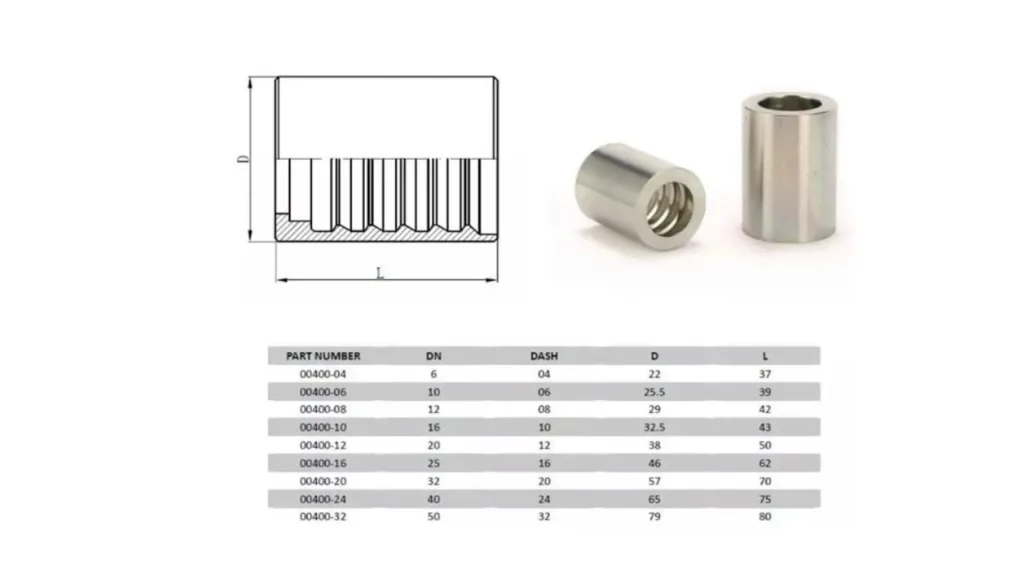
Yes, we understand that hydraulic systems often require specialized components to achieve optimal performance.
Therefore, we offer customization options for hose ferrule sizes to meet your unique application needs. Our engineering team can work with you to design and manufacture ferrules tailored to your specific hose dimensions, fitting requirements, and pressure ratings. This ensures a precise fit and secure connection, minimizing the risk of leaks and failures in your hydraulic systems.
To ensure you have access to the most up-to-date information on our customization capabilities and standard ferrule sizes, please contact us. Our team can provide you with the latest hose ferrule size chart and discuss your specific requirements. We are committed to delivering high-quality, customized solutions that meet the demanding needs of your hydraulic applications.
Quote Us Now